
Turn your expertise into thought leadership videos.
Your ideas deserve to be heard.
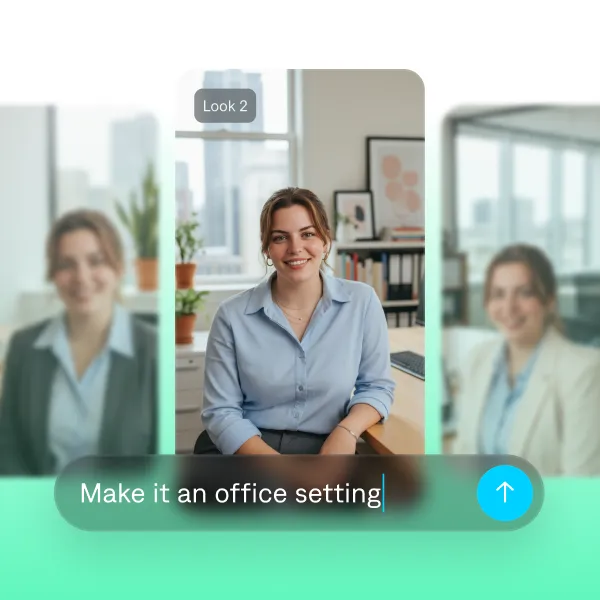
Build credibility
Thought leadership videos showcase your experience and confidence. Your video quality matters, whether you're sharing business tips, marketing advice or other professional expertise.
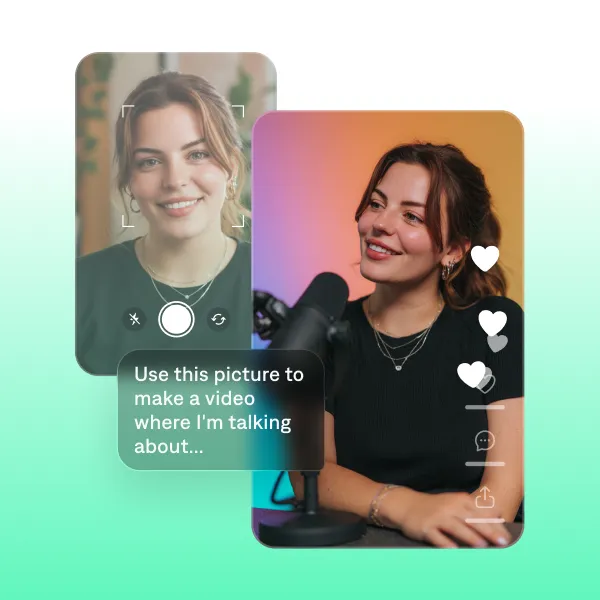
Extend your reach
Captions removes common barriers so you can move faster and post more consistently. You'll get great videos every time, even if you've never made video content before.
Features you'll love
Every video looks professional
Features like noise reduction and eye contact correction make videos look good—even if you recorded at your desk.
Stylized editing, in minutes
AI Edit turns footage into a fully edited video with accurate captions. No more waiting for resourcing or feedback.
Get started now
By uploading a video to be edited using AI, you are agreeing to our Terms and have read our Privacy Policy.
How to make a thought leadership video in Captions
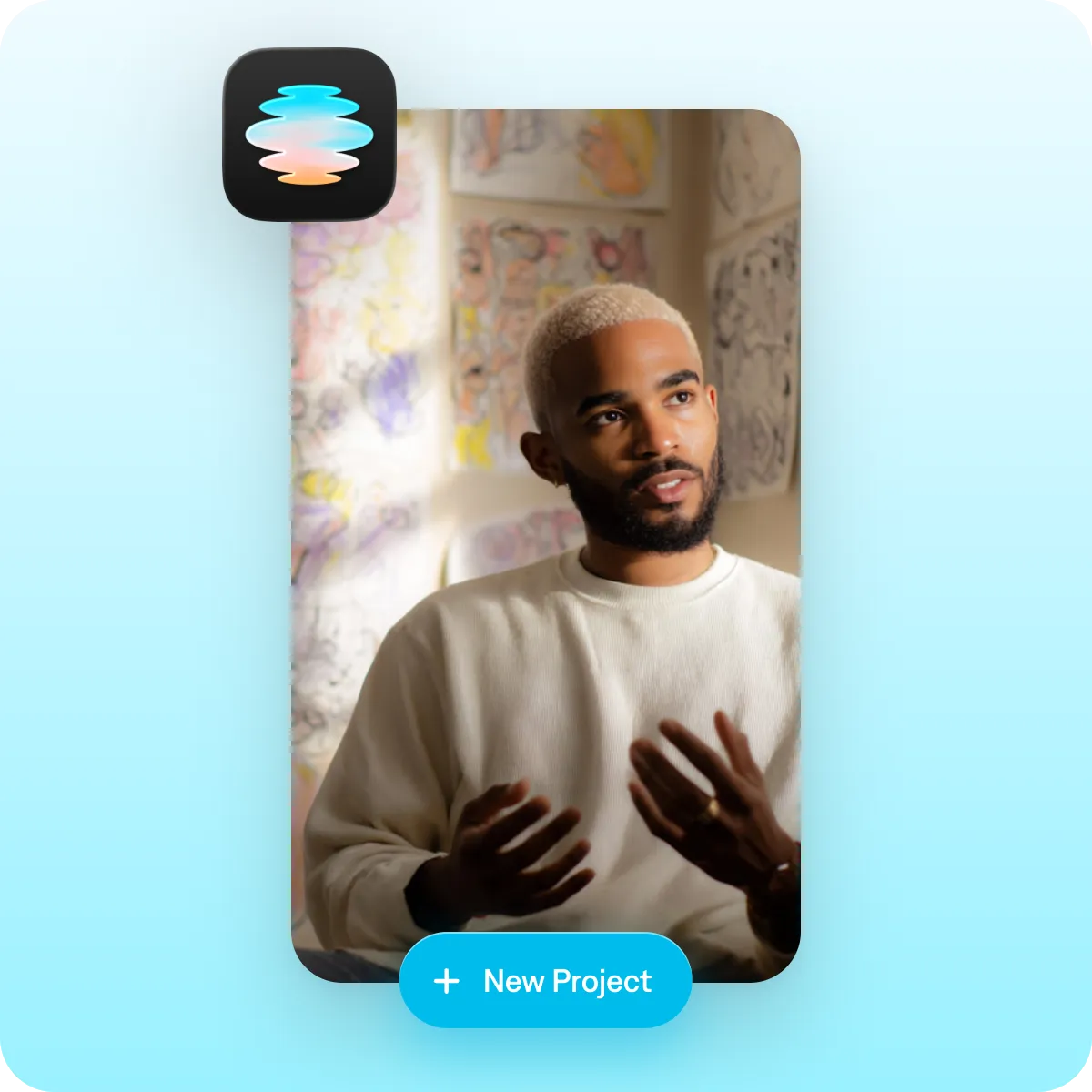
Step 1
Start a new project in your Captions account. You can make thought leadership videos online or in the Captions app.
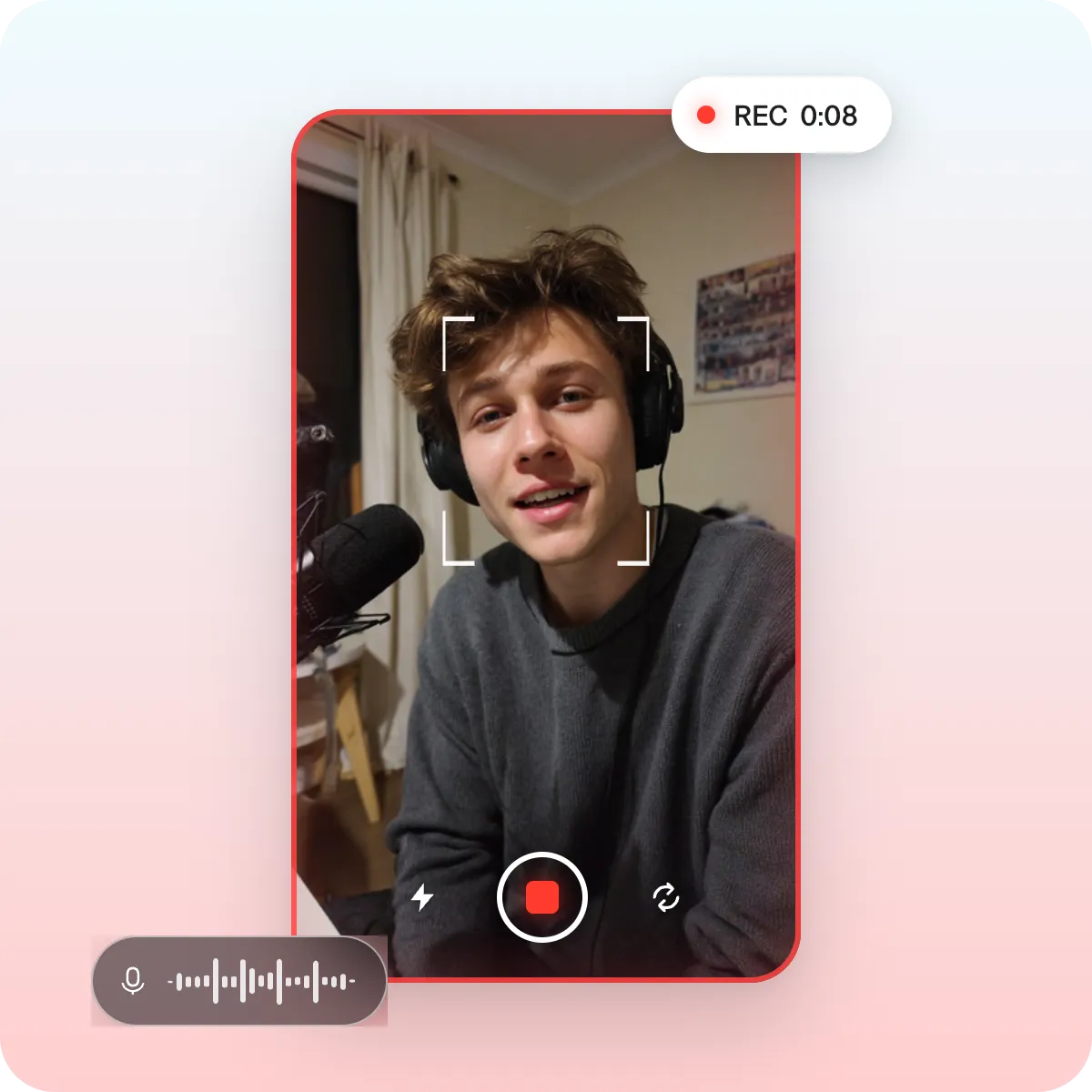
Step 2
Upload existing footage or record something new using the Captions camera.
Step 3
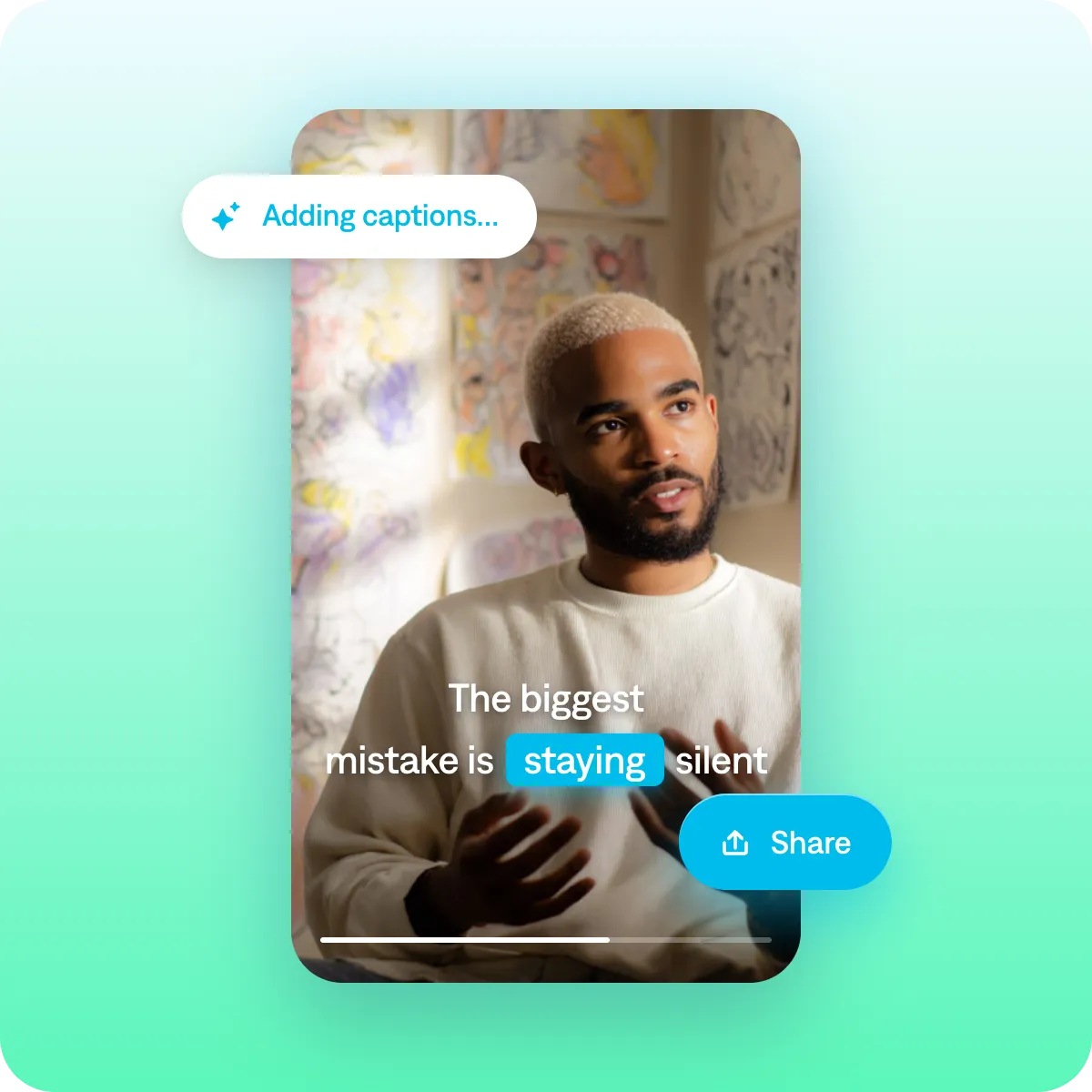
Add any details you want, like captions or subtitles. If you want a more robust edit, use AI Edit to insert B-roll, music and more. Then, you're ready for export.
Best practices for thought leadership videos
Own your perspective
The most successful thought leaders are known for a specific domain and their fresh point of view. Information is everywhere; your perspective is what makes content stand out.
Fill in video text fields
Resist the temptation to skip setup fields when you post. Fields like video titles and captions inform platform distribution and make your content more discoverable to new audiences.
Invest in your community
Keep an eye on comments and actively reply. Responding extends reach and shows that you care about your audience. This builds trust and credibility over time.
Get started now
Explore popular editing styles
Frequently asked questions
What types of formats are common for thought leadership videos?
Popular types of thought leadership content include whiteboard explainers, market updates, and product breakdowns. It’s also common to publish more conversational clips, like Ask Me Anything snippets and Q&As. Most short-form thought leadership videos are in a 9:16 vertical format for Instagram Reels and YouTube Shorts.
How do professionals build a personal brand using video?
Strong personal brands come from consistency and clarity more than from production value. Professionals tend to pick a narrow set of themes they want to be known for, then show up regularly with takes, lessons, and stories tied to those themes.
This kind of content depends on the speaker really connecting with their audience. Talking head videos help audiences connect a face and voice with the ideas, which builds familiarity and trust over time. Authenticity matters more than polish, so sharing real experiences (including what didn't work) often resonates more than overly-polished messaging.
What should I put in a thought leadership video?
For thought leadership content, it's best to script out your main talking points ahead of time so you share a succinct, cohesive point of view. Start with a question your audience actually asks or a belief you can defend. Then, develop your perspective and come up with a couple of supporting examples.
Focus each video on a single topic so your perspective is clear. And remember, the goal is to be useful, not to sell.
What makes a thought leadership video successful?
Strong thought leadership videos are clear, focused, and memorable. Start with a real question or challenge, explain why it matters right now, and share your take. Keep the pacing natural and the visuals purposeful: They should help people get it, not distract. End with something that sticks: a key insight, a practical takeaway, or a next step.
Where should you publish a thought leadership video?
Thought leadership can help contribute to reach and impact across a variety of channels. To start, pick the social platform where your audience is most likely to spend time. For many professionals, that's LinkedIn or YouTube. For some fields, it might be Instagram, TikTok, and Facebook instead.
Start to build a cadence for publishing and get a feel for your niche. Then, you can expand to more channels and keep reaching new audiences. If you have a website, you should also post your videos there. Videos can aid discoverability and help your website show up more often in search results.
How often should I post thought leadership videos to build an audience?
Consistency generally matters more than frequency. A sustainable rhythm you can maintain usually outperforms an intense burst that fizzles out. It's better to publish fewer high-quality, genuinely useful videos than to post often with little substance. Pick a cadence that fits your schedule, commit to it long enough to see patterns, and adjust based on what your audience responds to.
Is LinkedIn or YouTube better for thought leadership content?
It depends on your audience and format. LinkedIn tends to favor shorter, professional video aimed at peers, clients, and industry connections. It's especially strong for B2B reach and conversation, and tends to skew to timely perspectives. YouTube suits longer, more in-depth videos, as well as evergreen content that people return to over time.
Many people use both, repurposing a single idea into a short clip for LinkedIn and a fuller version for YouTube. The best choice is wherever your specific audience already spends their attention.